
Best Digital Marketing Strategy for Businesses in 2026
Introduction
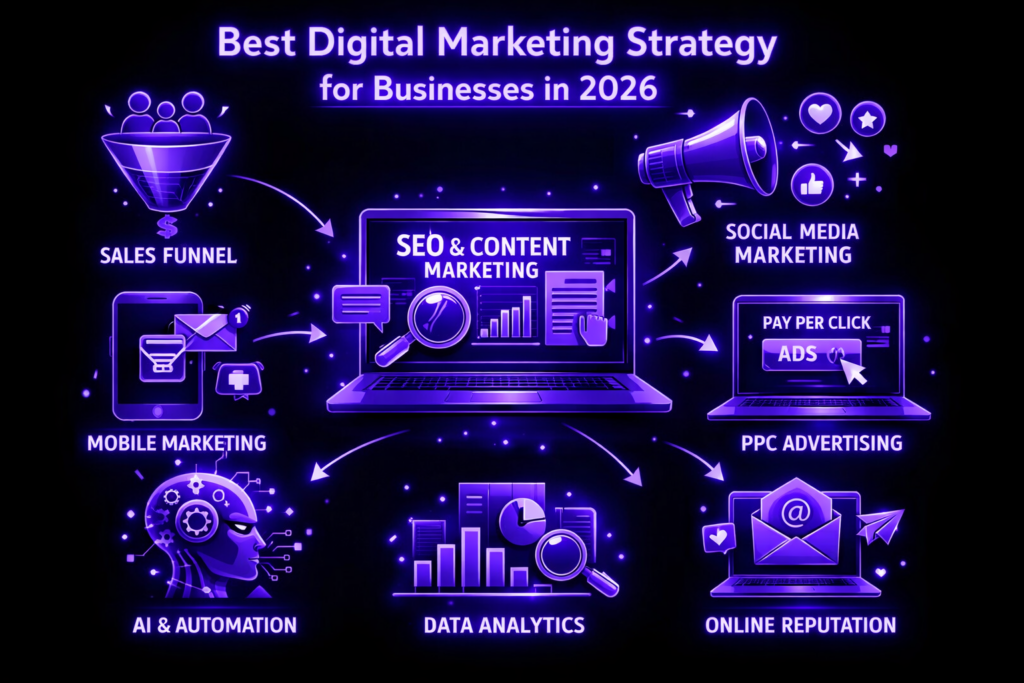
n 2026, the business world is more digital than ever before. Customers no longer depend on traditional methods to discover products or services they search, compare, and make decisions online. This shift has made digital marketing not just important, but essential for survival and growth. Businesses that fail to adapt risk falling behind, while those that embrace modern strategies can unlock unlimited opportunities. A well-planned digital marketing strategy helps brands connect with the right audience, build trust, and drive consistent revenue in a highly competitive market.
Understanding Your Target Audience
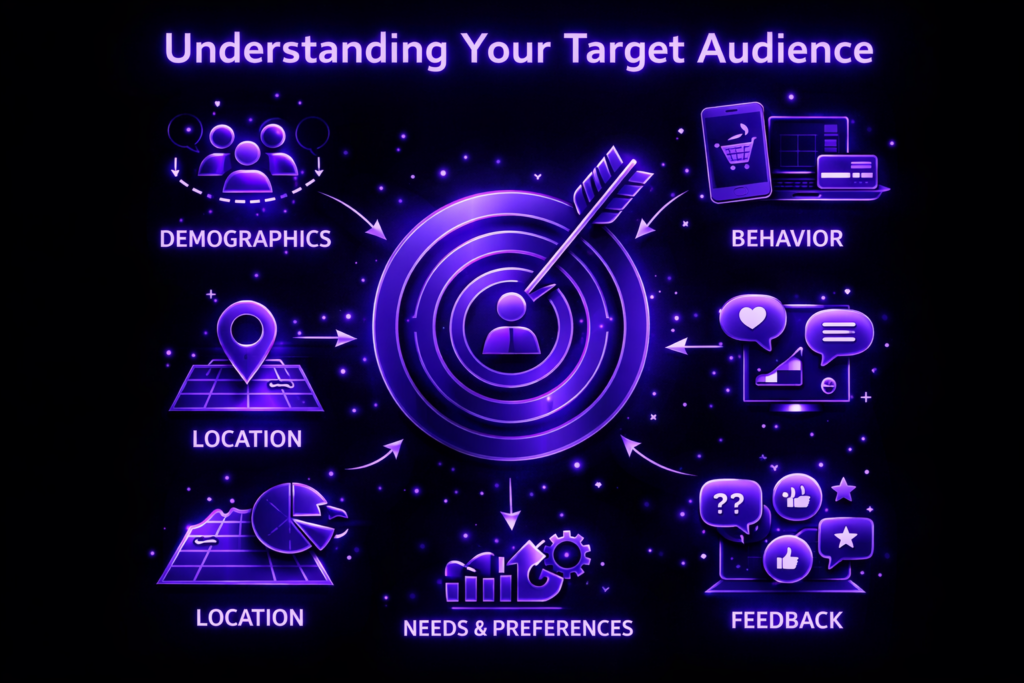
The first step in any successful digital marketing strategy is understanding your audience. Businesses need to identify their ideal customers based on age, location, interests, and online behavior. Knowing your audience helps you create personalized campaigns that connect with their needs. When you deliver the right message to the right people, your chances of conversion increase significantly.n conclusion, understanding your target audience is the key to building a successful digital marketing strategy. It allows businesses to create meaningful connections, deliver valuable content, and achieve better results. When you truly understand your customers, your marketing becomes more effective, more efficient, and more impactful.
Search Engine Optimization (SEO)
Search Engine Optimization (SEO) is one of the most powerful tools in digital marketing. It helps your website rank higher on search engines, making it easier for customers to find your business. In 2026, SEO focuses on user experience, quality content, and search intent. Optimizing your website for mobile devices, fast loading speed, and relevant keywords can improve your ranking and increase organic traffic.
Content Marketing Strategy
Content is the backbone of digital marketing. Creating valuable and engaging content helps businesses build trust and authority in their industry. Blogs, videos, social media posts, and infographics are effective ways to share information and connect with your audience. Instead of focusing only on selling, businesses should provide useful content that solves problems and answers customer questions.
Social Media Marketing
Social media platforms like Instagram, Facebook, and LinkedIn play a major role in business growth. They allow businesses to interact directly with their audience and build strong relationships. In 2026, authenticity is more important than perfection. Sharing real experiences, customer testimonials, and behind-the-scenes content helps build trust. Short-form videos like reels and shorts are highly effective for increasing engagement and reach.
Paid Advertising
Paid advertising is a fast and effective way to reach a larger audience. Platforms like Google Ads and social media ads allow businesses to target specific audiences based on their interests, location, and behavior. This ensures that your ads are shown to people who are more likely to convert. To achieve the best results, businesses should regularly monitor and optimize their ad campaigns.
Email Marketing & Automation
Email marketing remains one of the most reliable digital marketing strategies. It helps businesses stay connected with their audience and build long-term relationships. Sending personalized emails about offers, updates, and valuable content keeps customers engaged. With automation tools, businesses can send the right message at the right time, improving efficiency and results.
Use of Artificial Intelligence (AI)
Artificial Intelligence (AI) is transforming digital marketing in 2026. AI tools help businesses analyze data, predict customer behavior, and automate repetitive tasks. Chatbots, for example, provide instant responses to customer inquiries, improving user experience. AI also helps in content creation, ad optimization, and performance tracking, making marketing more efficient and effective.
Personalization & Customer Experience
Customers today expect personalized experiences. Businesses must use data to understand customer preferences and deliver tailored content, recommendations, and offers. Personalization improves customer satisfaction and increases conversion rates. A positive customer experience builds trust and encourages repeat business.
Local SEO for Small Businesses
For local businesses, local SEO is extremely important. Optimizing your Google Business Profile, using location-based keywords, and collecting customer reviews can help attract nearby customers. This strategy is especially useful for businesses targeting specific areas, helping them stand out in local search results.
Performance Tracking & Analytics
Measuring your digital marketing performance is crucial for success. Businesses should track key metrics such as website traffic, engagement, and conversion rates. Analytics tools help identify what is working and what needs improvement. Regular analysis allows businesses to adjust their strategies and achieve better results over time.
Conclusion
Measuring your digital marketing performance is crucial for success. Businesses should track key metrics such as website traffic, engagement, and conversion rates. Analytics tools help identify what is working and what needs improvement. Regular analysis allows businesses to adjust their strategies and achieve better results over time.